
Sisters of Shadows. Why Morena Echoes Lilith
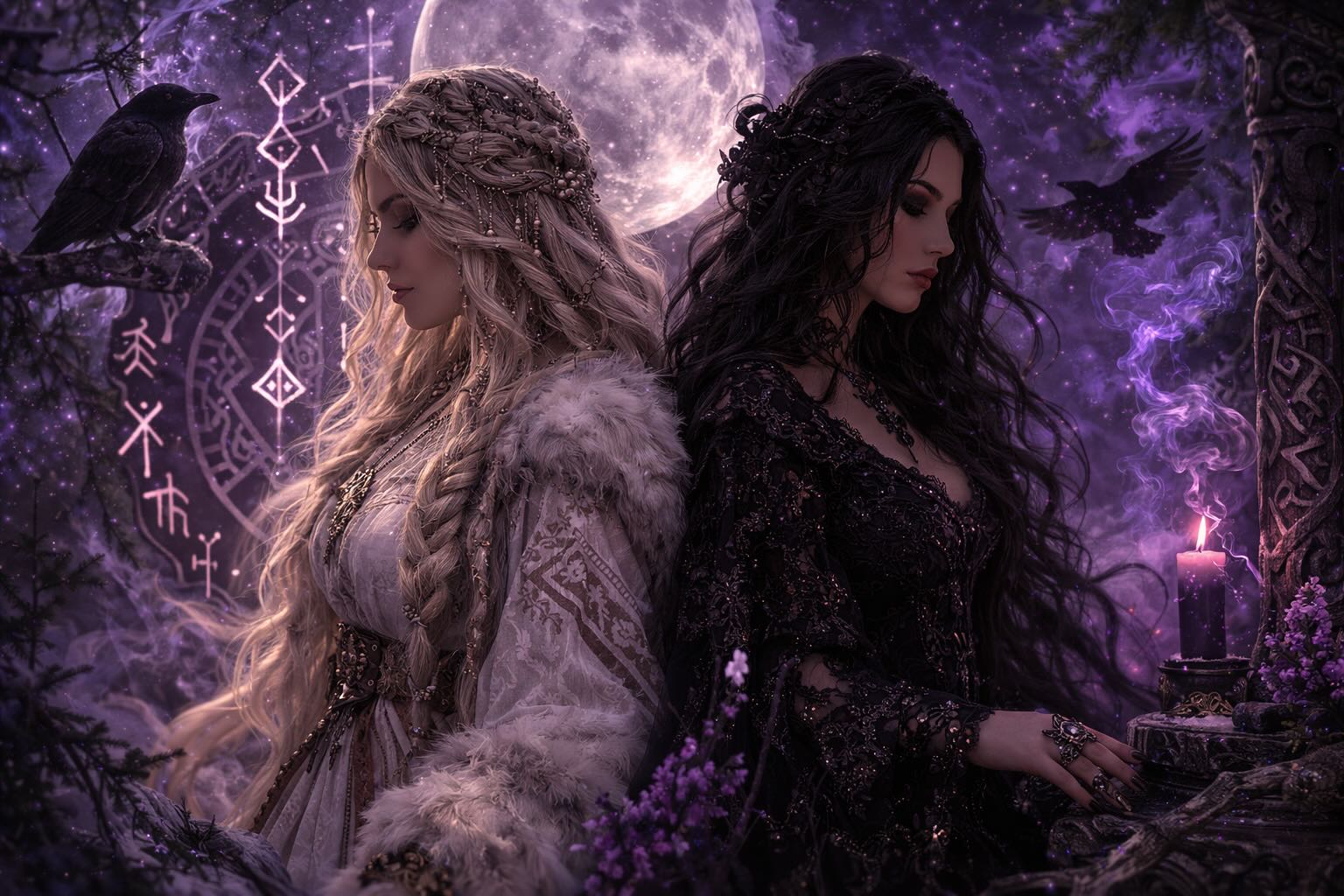
Lately, I have been catching myself more and more often thinking that the image of the Slavic Morena reveals features of the biblical Lilith. At first glance, these are different cultural codes: one is the mistress of winter and death, the other is Adam’s first wife, who became a demon of the night. But if we dig deeper, into their archetypal essence, the connection becomes obvious and frighteningly beautiful. My intuition tells me that these are two facets of the same stone.
Both figures embody the “shadow” side of the feminine principle. They do not fit, in any way, into the convenient patriarchal template of the “mother-guardian of the hearth.” Lilith rejected submission, choosing exile over life under Adam’s will. Morena, in turn, “kills” life every year, plunging the world into cold in order to ensure future rebirth. Both of them are about necessary severity, about a boundary that cannot be crossed without consequence.
Society has always feared such women. Independent women, carrying not only warmth but also the cold of distance. Lilith is associated with night and wind, Morena with water and withering. There is no domestic comfort in them; there is primordial power. It is precisely this power, frightening in its uncontrollability, that unites them in my perception. This is not about evil, but about universal balance. Without night, there is no day; without winter, there is no spring; without the right to say “no,” there is no personhood.
Today, as the world is changing, we need to understand this dark side in order to become whole. And it seems to me that we should look for strength in the images of the past.
Important note: this material reflects my authorial vision and my subjective interpretation of mythological figures. This is not an academic study, but an attempt to find personal threads of meaning between archetypes from different traditions. I ask that this be received as reflection, not as historical fact. And that is normal.
It seems to me that we have forgotten this side of the sacred feminine. It is time to remember that strength takes different forms.