
Daughters of the Night: My Vision of Lilith in the Slavic World
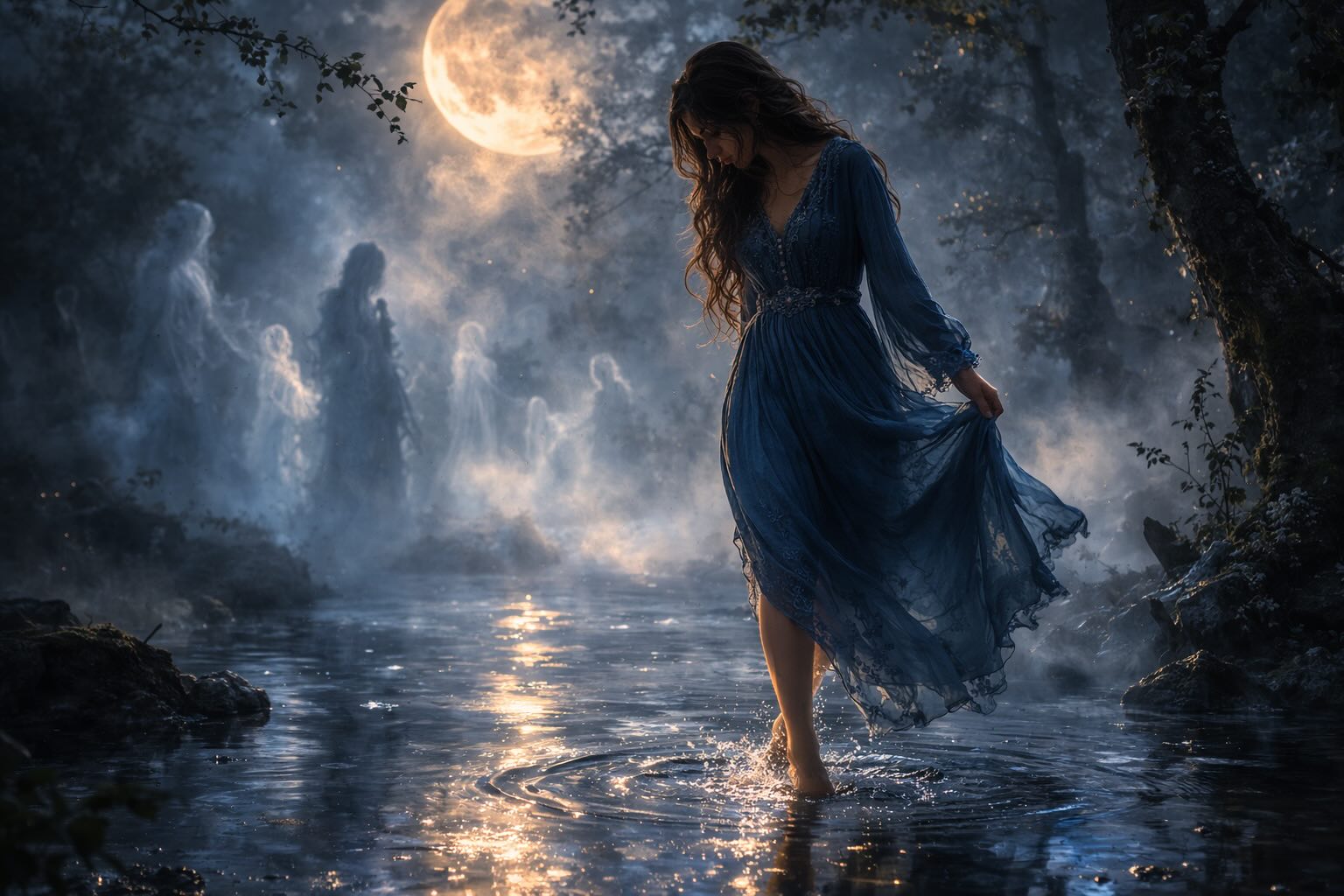
For me, Lilith is not simply an ancient demon from foreign lands, but an archetype of absolute, untamed freedom. When I immerse myself in our Slavic myths, I see a striking kinship: her spirit fits naturally into the images of our navias, midnight maidens, and rusalki. In my perception, they are one sisterhood of shadows.
I do not see Lilith as a villain, but as a guardian of those boundaries that society tries to erase. She is the patron of all who have chosen a path outside the rules. In Slavic folklore, her reflection appears in the spirits who live at the edge between worlds: rusalki, luring with their depth; kikimoras, whispering in the corners; maras, arriving in dreams. For me, they are all “daughters of the night,” beings who do not divide the world into black and white, but live in the richness of half-tones.
My personal conviction is this: these figures frightened our ancestors not because they brought death, but because they offered a dangerous freedom. They tested the soul, forcing it to look its true desires in the eye, without masks and without conventions. Within this lineage, Lilith is the high priestess of such transformation.
In my picture of the world, darkness is not emptiness, but a space where intuition and passion are born. It is at night, when the noise of the day falls silent, that the voice of Lilith and her Slavic companions sounds most clearly. They remind us that the true power of a woman — and of a human being in general — is born where control ends and trust in one’s inner beast begins.
My advice: do not be afraid of your “shadow.” Try, just once, to go out to the water at dusk, or simply listen to the silence of your home deep at night. Not for the sake of mysticism, but to hear that inner whisper we drown out during the day with busyness. Perhaps that is how your personal Lilith speaks — that part of you which knows the value of its own freedom.
This is my vision: myths remain alive as long as we are willing to see ourselves reflected in them.